 |
 |
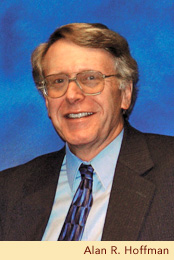
| The interviewee – Jonathan Meades | The interviewer – Jonathan Goldberg |
Jonathan Meades, a British intellectual, has established a solid reputation with public both within Britain and beyond its borders, in particular in the fields of food, architecture, films (about 25 television documentaries) and writing. Amongst all his professional activities, he served as the culinary critic of The Times of London for several years.
JG: A short list of the fields in which you have established a solid reputation in the public eye includes food, architecture, film documentaries (about 50 TV films) and writing. To begin our interview on the subject of food: as the restaurant critic of The Times for many years, what is your view of the recent case in France [Une blogueuse condamnée pour une critique de restaurant : une décision de faible portée – L’OBS] in which a court fined a blogger who wrote a critical review of a restaurant, after the owner complained that the review had adversely affected his reputation? You spend long periods in France. How would you deal with such constraints if you were a food critic in France?
 |
JM: I stopped writing about food and restaurants and about the questions such writing might raise fifteen years ago. Having said which food blogs do appear to attract some spectacularly ignorant non-writers.
JG: Your research into unusual aspects of architecture is well known to the public through several series of TV programmes of which the first was Abroad in Britain, (available in DVD format). How would you explain the anomaly of that title to our French readers and why did you choose it?
JM: My British subjects have invariably been provincial. As someone who lived all his adult life in London till seven years ago the British provinces are foreign, they are abroad…
JG: In a two-part documentary, Magnetic North, you introduced the British public to the lesser-known aspects of Northern Europe. Considering that many Britons have travelled throughout Northern Europe, how did you go about researching material that would make the film an eye-opener for TV audiences.

JM: The very point was that most Britons are entirely ignorant of northern Europe. The British, when they travel in Europe, favour Spain, France and Italy. Virtually anything i chose to show in northern Europe would be unknown to them. The programmes were, by the way, not travelogues but, like most of my stuff, polemical essays.
 JG: In 2012 BBC4 screened Jonathan Meades on France, a series in which you visited your “second country”. You seem to have adopted Benjamin Franklin’s dictum: “Every man has two countries : his own and France.” As someone who is very familiar with many European countries, what particular attraction does France hold for you?
JM: As I pointed out the ‘dictum’ is not Benjamin Franklin’s. It comes from a play by Henri de Bornier – who was French. I admire French republicanism.
 |
JG: You recently wrote an article in The Guardian entitled “So frenchy, so touchy, about the English language.“, in which you suggested that the French should drop their opposition to the influence of English. You wrote: “What is … peculiar is the dogged Canutism of a certain stratum of French society that fails to acknowledge that languages are mongrel organisms, and that the idea of purity is as unachievable as it is undesirable.” But don’t you think that there comes a point in the slavish adoption of English where many Frenchmen can have a legitimate fear that their language and culture are under threat?
JM: The chances of the French ‘slavishly adopting’ anything that they don’t want to adopt are nil.
 JG: Your dozen published books include “Filthy English”, a collection of short stories and your first work of fiction. Stephen Fry said that no-one understands England better than Meades. One reader described the book as follows:”.. A meal consisting of pan-fried foie gras with raspberry reduction, followed by confit of duck with cherry reduction, and a crepe Suzette to close. All delicious in their way but not in one evening.” Can you relate to that opinion expressed in culinary terms? Another reader wrote that he had only understood every third word. Might your style be too high-falutin in today’s dumbed-down society? Put otherwise, is this a book to be appreciated principally by the literatii?
 JM: I despise writers who take any notice of what their readers say, especially when they say it in so corny a way
JM: I am writing a new book and planning a new tv show – two almost antithetical exercises.